
How to detect a gas leak
LPG is naturally odourless, so a strong "rotten-egg" odorant is added to make leaks obvious. If you smell it inside or near a cylinder, treat it as a real leak until proven otherwise.
The soapy-water test
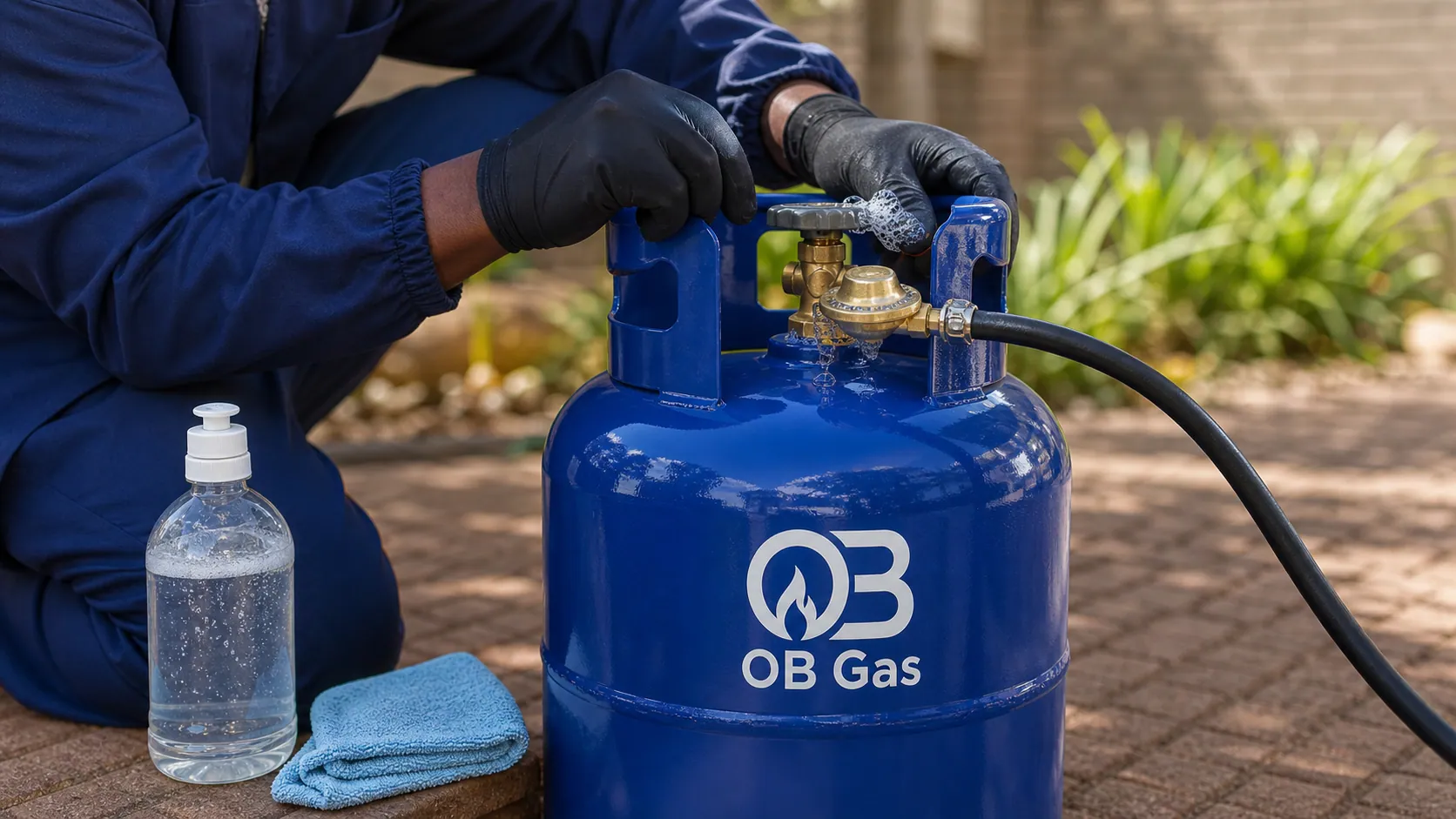
This is the standard, safe way to find a leak yourself:
- Mix a few drops of dishwashing liquid with water in a small bottle.
- With the cylinder valve open and the regulator connected, brush or spray the soapy water onto the connection points.
- Watch for bubbles forming. Bubbles = a leak at that joint.
- If you see bubbles, close the valve immediately and call us. Do not attempt to tighten a fitting that is actively leaking.
Storing your cylinder safely
- Always upright. A cylinder must stand vertically so its safety relief valve works correctly.
- Outdoors or in a ventilated space. Never store in a sealed cupboard, under a bed, or in a basement.
- Away from heat sources. Keep at least 1 metre from stoves, heaters, and direct sunlight in summer.
- On a stable, level surface. Avoid placing it where it can be knocked over.
- Out of reach of children and pets.
Connecting a regulator and hose
If you've never connected a cylinder before, ask the OB Gas delivery team to do it for you on the spot — it's part of the service. If you're doing it yourself:
- Make sure the cylinder valve is fully closed before connecting anything.
- Check the rubber sealing ring (bullnose washer) inside the regulator — it should be intact, not cracked, not flattened.
- Hand-tighten the regulator onto the valve. Don't use spanners or excessive force.
- Confirm the hose is clamped securely at both ends and isn't kinked or perished.
- Open the cylinder valve slowly and run the soapy-water test before lighting any appliance.
How often to replace fittings
Rubber gas hoses degrade over time, even when you can't see the damage. As a rule:
- Replace your gas hose every 3 to 5 years, sooner if you see cracking, hardening, or signs of perishing.
- Replace the regulator every 5 to 10 years, or immediately if it's been dropped, damaged, or shows corrosion.
- Replace the bullnose washer whenever it looks worn or any time you suspect a leak at the connection.
Using your stove safely
- Light the match or lighter before you turn the gas knob — not after.
- If a burner doesn't light within 2–3 seconds, turn the knob off, wait at least 30 seconds for gas to dissipate, then try again.
- Never leave a gas flame unattended, especially with children nearby.
- Keep cloths, paper, and flammable liquids away from the stovetop.
- Turn the cylinder valve off when you go away for the weekend or longer.
What to do in a gas emergency
- Don't switch any electrical device on or off — sparks can ignite gas.
- Don't light matches, lighters, candles or smoke.
- Open all windows and external doors to ventilate.
- Turn the cylinder valve OFF if you can do so safely.
- Get everyone out of the building.
- From outside, call OB Gas on +27 71 259 6096 or your local fire/emergency number.
Choosing the right cylinder size
The wrong size isn't dangerous, but it's wasteful and inconvenient. Quick guide:
- 3 kg / 5 kg — picnic, camping, single-burner setups, tiny homes.
- 9 kg — most family homes (the most popular size by far).
- 14 kg / 19 kg — large families, guesthouses, gas geysers, gas heating.
- 48 kg — restaurants, bakeries, workshops, anywhere with daily heavy use.
Not sure? Send us a quick WhatsApp with how many people you cook for and how often, and we'll recommend the most cost-effective option.
Common questions about LPG safety
Is LPG safer than electricity for cooking?
Both are safe when used correctly. LPG has the advantage that it works during power outages and offers instant, controllable heat. The main risk with LPG is leaks at fittings, which is why annual checks of your hose, regulator, and connections matter.
Can I leave my cylinder connected to the stove all the time?
Yes, in normal daily use. But always close the cylinder valve if you're leaving home for several days, and have the connections checked at least once a year.
What does the date stamped on my cylinder mean?
It's the cylinder's last pressure-test date. Cylinders need re-certification every 10 years. We never refill expired cylinders — we exchange them for an in-date one at no extra cost.